Choose dishes that scale
Some dishes are easy to make in large amounts. Others fall apart when you multiply them. For a big meal at home, lean on the first kind:
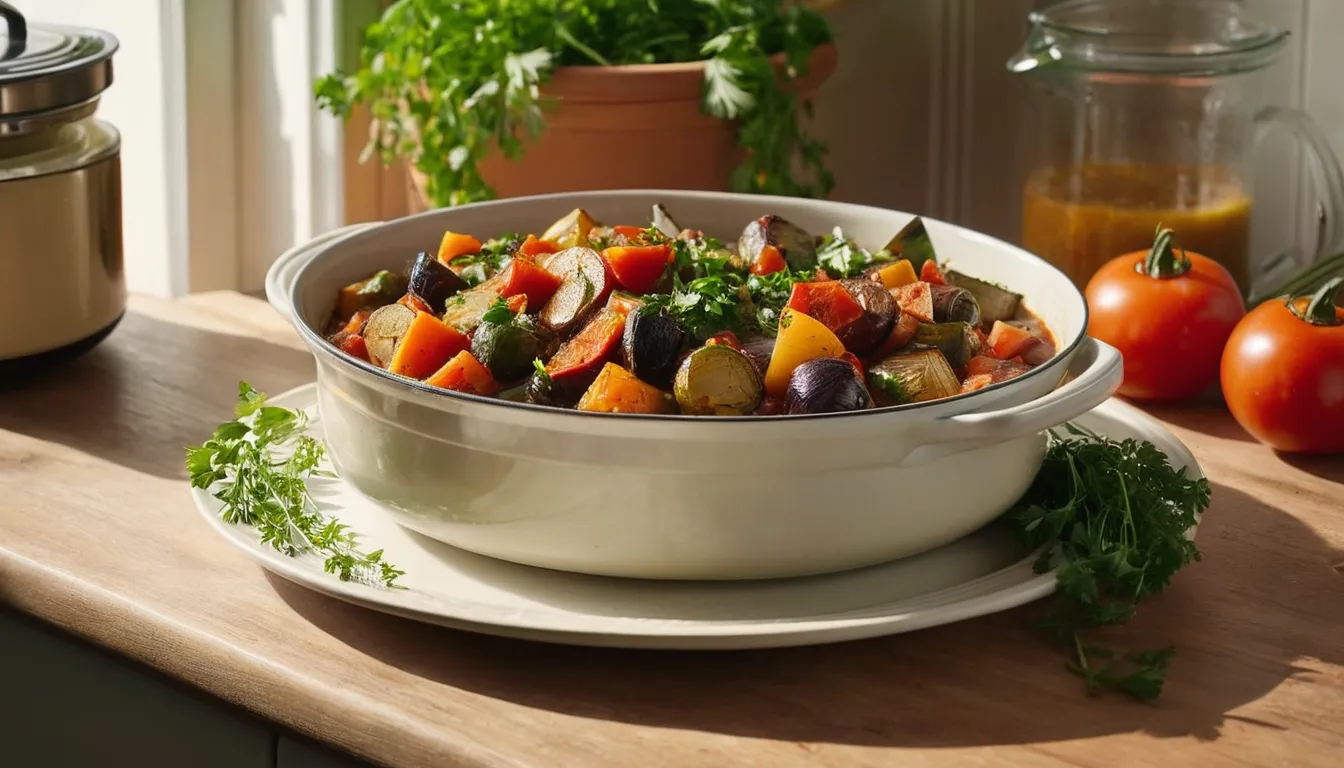
- Braises and stews. They cook in one big pot, hold well, and often taste better the next day.
- Roasts and traybakes. One large cut or two full sheet pans feed a lot of people with little hands-on time.
- Baked pasta and casseroles. Assemble ahead, bake when guests arrive.
- Big salads and grain salads. Hearty grains and sturdy vegetables hold up for hours. Dress leafy salads at the last minute.
Avoid dishes that need last-minute cooking in batches, like fried foods or individually seared steaks. Each batch keeps you at the stove while everyone else eats.
Plan oven, stovetop and fridge space
Write the menu down, then next to each dish note where it cooks and when. Conflicts show up quickly. The plan below is for a dinner at six o'clock.
| Time | Oven | Stovetop | Counter |
|---|---|---|---|
| Day before | None | Make the stew, cool it fast, refrigerate | Chop vegetables, make dressing |
| 4:00 | Preheat to 425°F | None | Toss vegetables in oil and salt |
| 4:45 | Two pans of vegetables | Reheat stew gently | Set out plates |
| 5:30 | Vegetables out, bread in to warm | Stew to a simmer | Dress the salad |
| 6:00 | Off | Stew on low | Serve |
A slow cooker or electric pressure cooker can act as a second oven or an extra burner. So can a grill outside if the weather allows.
Rough amounts per person
Appetites vary, and a meal with many sides needs less of each. These are common planning figures for adults at a main meal:
- Boneless meat or fish: about 1/3 to 1/2 pound raw per person.
- Bone-in meat: about 3/4 pound raw per person.
- Rice or other grains: about 1/3 to 1/2 cup uncooked per person as a side.
- Dried pasta: about 3 to 4 ounces per person as a main.
- Vegetable sides: about 1 cup per person in total across all sides.
Our scaling guide shows how to multiply a recipe without overdoing the salt and spice.
Keep a big meal safe
Large amounts of food cool slowly and sit out longer, which gives bacteria more time to grow. A few habits help:
- Cool big batches quickly. Divide stew or soup into shallow containers before refrigerating.
- Keep hot food hot, at 140°F or above, in a low oven or slow cooker set to warm.
- Keep cold food cold, at 40°F or below. Set salads on ice or bring them out in smaller bowls.
- Put leftovers away within two hours, or within one hour on a day above 90°F.
- Reheat leftovers to 165°F.
Ask about allergies early. When you invite people, ask about food allergies and diets. Label dishes that contain common allergens such as nuts, dairy, eggs, wheat or shellfish, and keep serving spoons with their own dish.
Let people help
Hand out simple jobs: someone fills water glasses, someone carves, someone clears plates. If guests offer to bring something, suggest a salad, bread or dessert, which need no oven time in your kitchen.