How to read a pan map
Each map shows a standard half sheet pan from above, about 18 by 13 inches. The colored blocks show roughly how much room each ingredient takes. The bars underneath show when each item goes into the oven and how long it cooks. The ticks along the bottom count minutes from the moment the first item goes in.
To add an item partway through, pull the pan out, push things aside if needed, add the new ingredient with a little oil and salt, and slide it back in. Use oven mitts and work quickly so the oven stays hot.
Chicken thighs, potatoes and carrots
- Potatoes, 1-inch chunks40 min
- Carrots, thick coins40 min
- Bone-in chicken thighs40 min
- Red onion wedges25 min
Done when: Chicken reads 165°F in the thickest part, away from the bone. Potatoes are crisp at the edges.
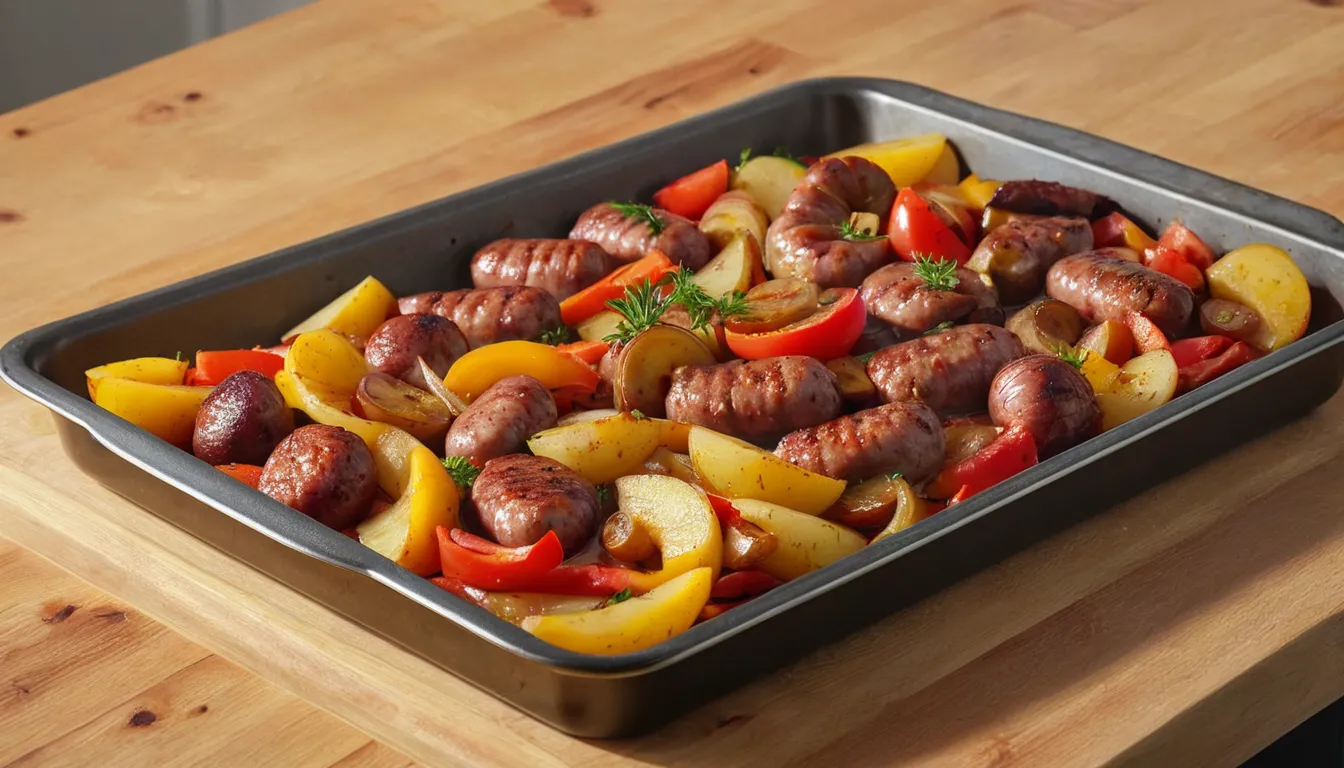
Sausages, peppers, onions and potatoes
- Baby potatoes, halved35 min
- Fresh sausages25 min
- Bell pepper strips25 min
- Onion slices25 min
Done when: Pork sausages read 160°F in the center. Peppers are soft and browned at the tips.
Salmon, broccoli and crisp chickpeas
- Chickpeas, drained and dried25 min
- Broccoli florets17 min
- Salmon fillets13 min
Done when: Salmon reads 145°F and flakes with a fork. Chickpeas are dry and crunchy.
Tofu, sweet potato and green beans
- Sweet potato cubes35 min
- Pressed tofu cubes35 min
- Green beans, trimmed15 min
Done when: Sweet potato is tender through. Tofu is golden on at least two sides.
The rules that make sheet pans work
- Use a hot oven. 400°F to 450°F is the usual range. We use 425°F for all four maps.
- Don't crowd the pan. Food packed tightly steams and turns soft. If it doesn't fit in a single layer with a little space, use two pans.
- Cut to match. Pieces of the same ingredient should be about the same size so they cook evenly. Cut slow vegetables smaller and quick ones bigger.
- Dry the surfaces. Pat chicken, tofu and drained chickpeas dry. Water on the surface stops browning.
- Oil lightly and evenly. Toss everything in a bowl with oil and salt rather than drizzling on the tray.
- Turn once. Flip or stir the vegetables about halfway through for even color.
Typical times at 425°F
| Ingredient | Cut | About |
|---|---|---|
| Potatoes, sweet potatoes | 1-inch chunks | 30 to 40 min |
| Carrots, parsnips | Thick coins or sticks | 25 to 35 min |
| Onions, bell peppers | Wedges or strips | 20 to 25 min |
| Broccoli, cauliflower | Medium florets | 15 to 20 min |
| Green beans, asparagus | Trimmed, whole | 10 to 15 min |
| Bone-in chicken thighs | Whole | 35 to 45 min, to 165°F |
| Salmon fillets, about 1 inch thick | Whole | 12 to 15 min, to 145°F |
These are typical ranges, and ovens vary a lot. Check vegetables with a fork and meat or fish with an instant-read thermometer. Our safe temperatures page lists the full chart.
Swaps that keep the timing
A map is a pattern, so you can swap ingredients with similar cooking times. Butternut squash can stand in for sweet potato. Cauliflower can stand in for broccoli. Boneless chicken thighs cook faster than bone-in, so put them in about 15 minutes later. Shrimp cooks in under ten minutes and should go in near the end.
Finishing touches
A roasted tray tastes finished when you add something fresh and sharp at the end: a squeeze of lemon, a spoon of yogurt sauce, chopped parsley or basil, or a drizzle of vinegar. These take a minute and lift the whole pan.